

I went to see Godzilla Minus One last night. Going in, I thought I was going to enjoy watching ‘Zilla stomp around and do his thing, as he has for the last 70 years. However, almost from the start, I found myself in an entirely new experience. For the first time in my life, I wanted Godzilla to die. And for the first time, I cried while watching a Godzilla movie.
Godzilla Minus One is the first Godzilla movie that serves as a full historical period piece. The story takes place between 1945 and 1947, depicting the struggle that Japan went through during that time through the eyes of Shikishima, a kamikaze pilot. The consequences of Japanese imperialism and the war they waged have never been captured so perfectly as in the cinematic masterpiece that is Godzilla Minus One.
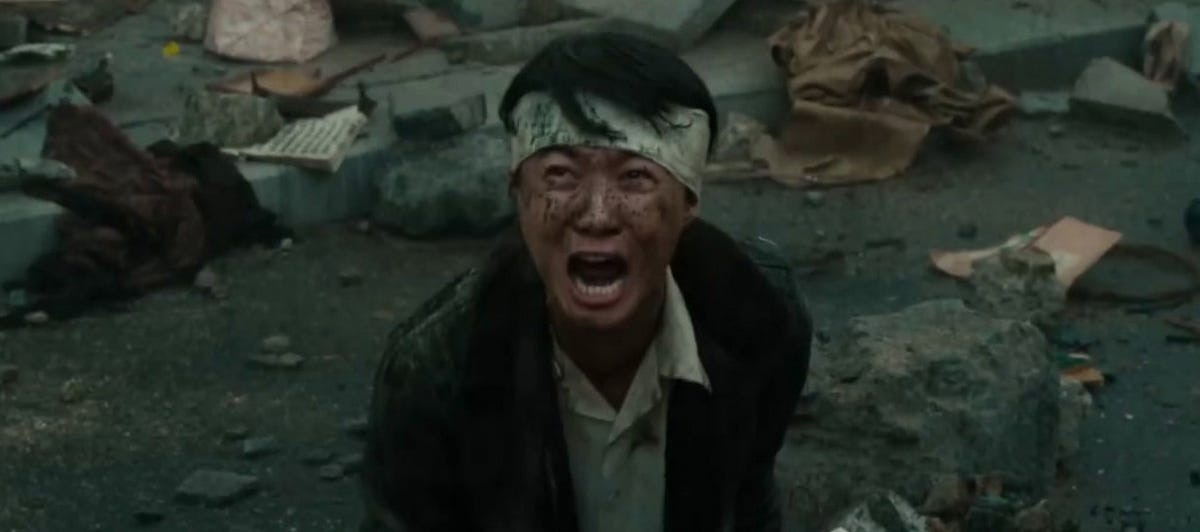
In every Godzilla film, the audience generally fails to connect with any human element. Usually, we get an instant survival reaction that ignores any deeper meaning behind what the humans are surviving and, most importantly, why they are surviving. All of that is delivered with precision in Minus One.
In this two-plus-hour film, I experienced absolute shame, anger, and reconciliation that the survivors of the war went through: the shame of national and personal familiarity, the anger of survival, and the realization of how the government betrayed them, leading to eventual reconciliation to forge ahead and survive. The allegory was poetic.
Finally, in this film, we get to see that Godzilla is the very real consequence of Japan’s actions throughout the war. The government’s demented desires of imperialism betrayed the citizens of Japan. Sadly, that realization only occurred post-devastation. Just as they faced the sun to rebuild, the literal consequence rises from the water to remind them that the sins of their ways will never let them be. It is a part of them now, and there is no purging it. Instead, they have to come to terms with the monster, both literal and figurative, and find a way to live with it as a people for the rest of their lives.
To make this cause-and-effect impactful, filmmaker Takashi Yamazaki has us follow the protagonist, Shikishima, as he comes to terms with life as a Japanese man post-war. Shikishima faces the challenges of cultural identity, national responsibility, and, most importantly, the responsibility as a man.
All in all, this is not a movie; it’s a film. It’s a film that hits like a folk song about how people rose up and carried the cross of their country’s failures. In the perfectly placed elements, Godzilla Minus One emerges not just as another Godzilla movie but as a cinematic masterpiece about consequences.




 TGM
TGM 
Leave a comment